StainWise Blog
StainWise: An AI Laundry Assistant for Stain Removal
Use StainWise's AI-assisted laundry tool to analyze a stain photo, suggest a likely stain type, and get fabric-conscious removal guidance.
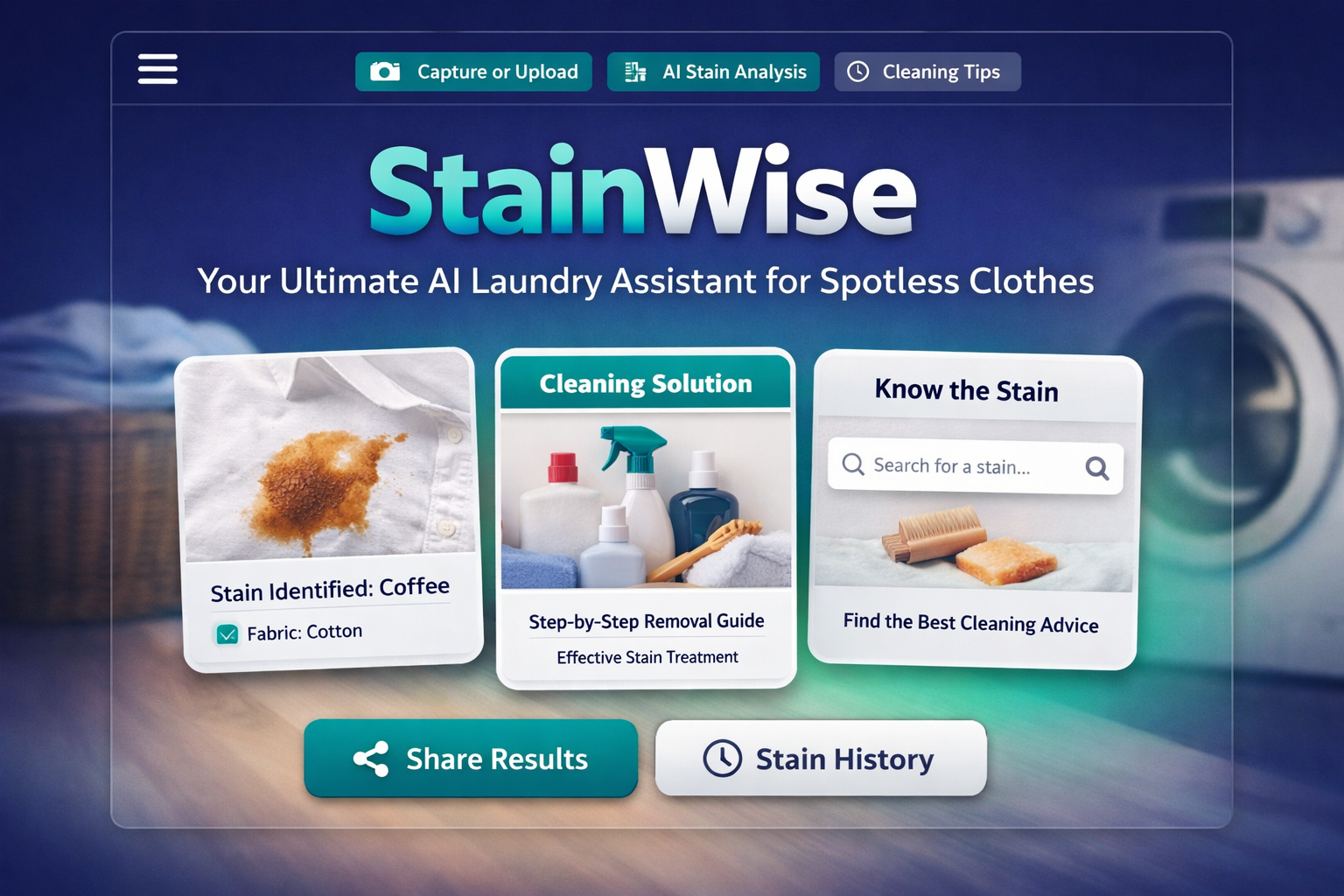
Do you dread laundry day, especially when faced with a mysterious, stubborn stain? The panic sets in: What is it? How do I get it out? Will I ruin this garment? For generations, tackling laundry stains has been a game of guesswork, trial-and-error, and often, heartbreaking failures. From frantic online searches to consulting well-worn cleaning guides, the effort required to identify and treat a stain correctly can be overwhelming. But what if there was a better way? What if, instead of guessing, you could start from a considered reading of the mark — a likely stain type and a method matched to both the stain and the fabric?
StainWise is a web-based AI laundry assistant built for exactly that moment. It reads a photo of the mark, proposes a likely stain type and fabric, and returns a step-by-step method to try. To be clear about what that is: an informed starting point, not a verdict. The AI can be wrong, so the care label, the product's own instructions and a spot-test on a hidden area still decide what you actually do.
This article covers what the tool does, where its smart laundry solutions genuinely help, and where they fall short — because knowing the limits is what makes the suggestions safe to act on.
Revolutionizing Your Laundry Routine with AI
For too long, stain removal has been a frustrating, hit-or-miss endeavor. Traditional methods often rely on generalized advice, which can be ineffective or even damaging to certain fabrics. You might spend precious time scrubbing, soaking, or trying various concoctions, only to find the stain still lingering, or worse, permanently set. This is where the power of artificial intelligence steps in, fundamentally changing the game.
StainWise uses AI — Gemini 2.5 Pro — to read the stain from a photograph. Take a picture of the spill on your shirt, whether it is red wine, a grass mark from the park or a coffee ring, and the tool proposes a likely culprit along with an assessment of the fabric and colour. That reading is an inference, not a measurement: similar-looking marks can be confused, and a photo cannot show what the stain has already been through. What it does give you is a considered place to start rather than a guess.
The value is not only speed. Instead of a generic tip, you get a method matched to what the tool believes the stain and fabric to be, which is usually a better first attempt than working through remedies at random. It is not a substitute for a professional cleaner, though — a dry cleaner can inspect the garment in person, test the fibre and take on risks a home treatment should not. For valuable, antique or heavily damaged items, that remains the better option. For more on how the analysis works, see StainWise: AI-Assisted Laundry Stain Identification.
The Pain Points of Traditional Methods
Before StainWise, common approaches involved:
- Blind Guessing: Assuming a stain type and using a general cleaner.
- Ineffective Remedies: Applying the wrong treatment, which can set stains permanently.
- Fabric Damage: Using harsh chemicals or scrubbing techniques unsuitable for delicate materials.
- Time Consumption: Researching countless articles and trying multiple solutions.
What StainWise Does Differently
- Visual Analysis: Upload a photo and the AI proposes a likely stain type from what it can see.
- Fabric Awareness: It factors in the material it infers, so delicates get gentler suggestions — while the care label remains the authority.
- A Fast Starting Point: You get a method within seconds, which matters because fresh stains are far easier to treat than dried ones.
- Stated Limits: Suggestions can be wrong, and some set-in stains will not come out completely. Spot-test on a hidden area first.
Beyond Identification: A Complete Laundry Partner
Naming a stain is only the first step; knowing what to do about it is the part that matters. So StainWise pairs the analysis with a set of features that cover the whole sequence, from the first blot to the final wash.
Once the AI has proposed a stain type, it generates a step-by-step method for that stain on that fabric — the type of product to use, water temperature, technique and order of operations, plus warnings about the moves that commonly make things worse. It is a method to work through, not a promise about the outcome; see Stain Removal by Fabric: A Step-by-Step Guide for how to apply it.
If you already know what the stain is, the "Know the Stain, Find a Solution" search tool lets you select the stain type yourself and go straight to the method, skipping the photo. Because you supply the identification, that route avoids the main source of error. StainWise also keeps a history of your past analyses so you can see what you tried before, and lets you share a result with someone else in the household.
What a Result Includes
- Detailed Steps: Clear instructions from pre-treatment to final wash.
- Product Suggestions: Common household items or general categories of specialised cleaner.
- Fabric-Specific Warnings: Alerts about delicate materials and colourfastness risks.
- Practical Tips: Options to try on stubborn marks, and when to stop and consult a professional.
Beyond the Camera: Text-Based Lookup
Even without a photo, StainWise is still useful:
- Searchable List: Find a method for a known stain such as "red wine" or "grease."
- Reference Guides: Browse cleaning information for common stain and fabric combinations.
Tackling Common Culprits
Everyday life is messy, and clothes bear the brunt of it. Morning coffee, an evening glass of wine, ink from a leaky pen — these are the regular offenders in most households, and they are also the cases where a quick, sensible first move makes the biggest difference. That is where an AI laundry assistant is most useful.
Say a drip of coffee lands on your white shirt as you head out. Photograph it, and the tool will typically read it as a coffee stain on cotton and return a short plan: blot the excess, flush from the back with cold water, apply a little liquid detergent directly to the mark, work it in gently, then wash as usual. Acting on that within minutes, rather than after the stain has dried, is what usually decides the result. For a walk through specific everyday marks, see Everyday Stains: Coffee, Wine and Ink Explained.
StainWise covers a wide range of common stains and adjusts its instructions to the properties of each — oil-based, protein-based, dye-based all respond to different chemistry. That is genuinely more useful than a single all-purpose tip. It is not a cure-all, though: ink can be effectively permanent on some fabrics, and a mark that has already been through a hot dryer may only lighten. What you gain is a targeted first attempt instead of guesswork, and a clearer sense of when to stop and let a professional take over.
Common Stains, Uncommon Solutions
StainWise provides tailored strategies for:
- Coffee & Tea: Focusing on tannin removal and pre-treatment.
- Red Wine: Emphasizing immediate action and specific absorbents.
- Grease & Oil: Utilizing degreasers and thorough flushing.
- Ink: Differentiating between washable and permanent ink, with targeted solvent advice.
- Grass & Mud: Addressing pigments and particulate matter effectively.
- Blood: Stressing cold water and enzyme-based treatments.
Why Acting Fast Matters
- Timely Advice: A method in the first minutes after a spill, when treatment is most likely to work.
- Reduced Damage: Knowing which moves spread or set a stain helps you avoid them.
- A Clear Next Step: You start from a considered method, and you know when to stop and consult a professional.
The Chemistry Underneath: How AI Helps
Stain removal is not magic; it is chemistry and physics. A stain is a foreign substance bound to fabric fibres, and getting it out depends on what it is made of and how it reacts to a given cleaning agent, temperature and technique. That is the knowledge an AI laundry assistant is drawing on when it proposes a method. For the underlying principles, see The Science of Stains: Protein, Oil and Dye Marks.
When you upload a photo, Gemini 2.5 Pro reads the visual cues — the colour, texture and density of the mark; the weave, apparent fibre and colour of the cloth; whether the stain looks fresh or already set. From that it forms a hypothesis about what the stain is and what state it is in. A hypothesis is the right word: it is reasoning from an image, not a laboratory test.
It then applies well-established cleaning chemistry to that reading. Protein stains such as blood or milk need cold water and enzymatic cleaners, because heat sets them; oil-based stains respond to degreasers and warmer water; delicate silk tolerates far less than sturdy cotton, and some dyes react badly to bleaching agents. Those rules are sound. The uncertainty sits in the identification step before them — which is why the method is a reasoned first attempt to verify against your care label, not a calculated certainty.
How AI Helps With Stain Analysis
- Pattern Recognition: Reading visual characteristics such as a granular texture, an oily sheen or dye bleed.
- Contextual Understanding: Taking the surrounding fabric's weave, colour and condition into account.
- Material Science: Connecting stain types with fabric chemistry when suggesting a cleaning agent.
Where AI Helps, and Where It Doesn't
- Broad Reference: It can draw on far more stain and fabric combinations than most of us keep in mind.
- Consistent Method: It applies the same reasoning every time, rather than whatever remedy comes to mind first.
- Real Limits: It works from one photograph — it cannot touch the fabric, test the fibre or read the care label, and it can misidentify a mark. A professional cleaner inspecting the garment can do things it cannot.
- No Self-Learning From Your Photos: The underlying model is not retrained on your uploads, so it does not get better at your particular stains over time.
Your Smart Laundry Companion for a Greener Home
Treating a stain properly has a side benefit worth mentioning: the garment stays in use. Extending the life of what you already own is one of the more effective everyday choices available. For a broader view of garment care, see Laundry Best Practices for Longer-Lasting Clothes.
Most of us have given up on a shirt because a stain looked hopeless. A sensible first attempt gives some of those items another chance — and each one kept in the wardrobe is one fewer replacement to buy. Not every stain can be saved, so this is a modest gain rather than a transformation, but it is a real one.
There is a smaller saving in cleaning products too. Rather than buying several specialised removers on the chance that one works, you are pointed toward the type of product suited to that stain, in a reasonable amount. That means less over-treating, which is better for the fabric as well as for what ends up in the wastewater. It is a practical, incremental smart laundry solution, not an environmental claim beyond that.
Practical Savings
- Garment Life: Stains that do come out keep clothes wearable for longer.
- Less Waste: Fewer items given up on, though some stains genuinely cannot be saved.
- Product Use: Reaching for the type of product suited to the stain, in a reasonable amount.
- Money: Fewer replacements, and fewer trips to the dry cleaner for marks you can handle at home.
Mindful Habits
- Informed Decisions: Understanding how your fabrics should be treated, starting with the care label.
- Repair Over Replace: Maintaining what you own instead of buying again.
- Less Guesswork: A targeted first attempt beats working through the cupboard at random.
Frequently Asked Questions About StainWise
Q: What types of stains can StainWise identify?
A: It covers the common categories — protein-based marks such as blood, milk and grass; oil and grease; dye-based stains such as wine and juice; and many others. A clear photo gives it more to work with. Unusual or already-treated marks are harder to read, and it will sometimes get them wrong.
Q: Does StainWise recommend specific cleaning products?
A: It suggests common household items (dish soap, white vinegar, hydrogen peroxide) or general categories of cleaner (such as an enzymatic pre-treatment) rather than brand names, so you can use what you already have. Follow the instructions on whatever product you actually use.
Q: How accurate is the AI stain diagnosis?
A: We do not publish an accuracy figure, because we have not measured one under controlled conditions — any number here would be invented. What it does is propose a likely stain type from a photograph using Gemini 2.5 Pro. Visually similar stains can be confused, and photo quality affects the result. Treat every suggestion as something to verify before you act on it.
Q: Can I use StainWise for stains that are already set?
A: You can, but be realistic about it. Suggestions for older marks usually involve re-wetting and loosening the stain, and results vary a great deal with the stain type, the fabric and how long it has been there. Anything that has been through a hot dryer may only lighten rather than disappear.
Q: Is StainWise only for photo analysis, or can I look up stains by name?
A: Both. Alongside photo analysis, the "Know the Stain, Find a Solution" search tool lets you select a stain type yourself and get a method without uploading an image. For more detail, see our StainWise FAQ: How Our AI Stain-Identification Tool Works.
Conclusion
A stubborn stain is far less daunting when you have a method instead of a guess. As an AI laundry assistant, StainWise proposes a likely stain type from a photo and returns step-by-step instructions matched to it and the fabric — a considered starting point, available in seconds.
What it is not is a guarantee. The AI can misread a mark, and some stains simply will not come out completely, particularly old ones or any that have already been through a hot dryer. Used alongside the care label, the product's own instructions and a spot-test on a hidden area, though, it removes most of the risk from that first attempt — and it will tell you when a professional cleaner is the better call. That is a genuinely useful smart laundry solution, without overstating it.
Got a stain to deal with? Try StainWise on your next spill.