StainWise Blog
StainWise: AI-Assisted Laundry Stain Identification
StainWise uses AI to suggest a likely laundry stain type from a photo, with cleaning steps to try. Suggestions can be wrong, so verify and spot-test first.
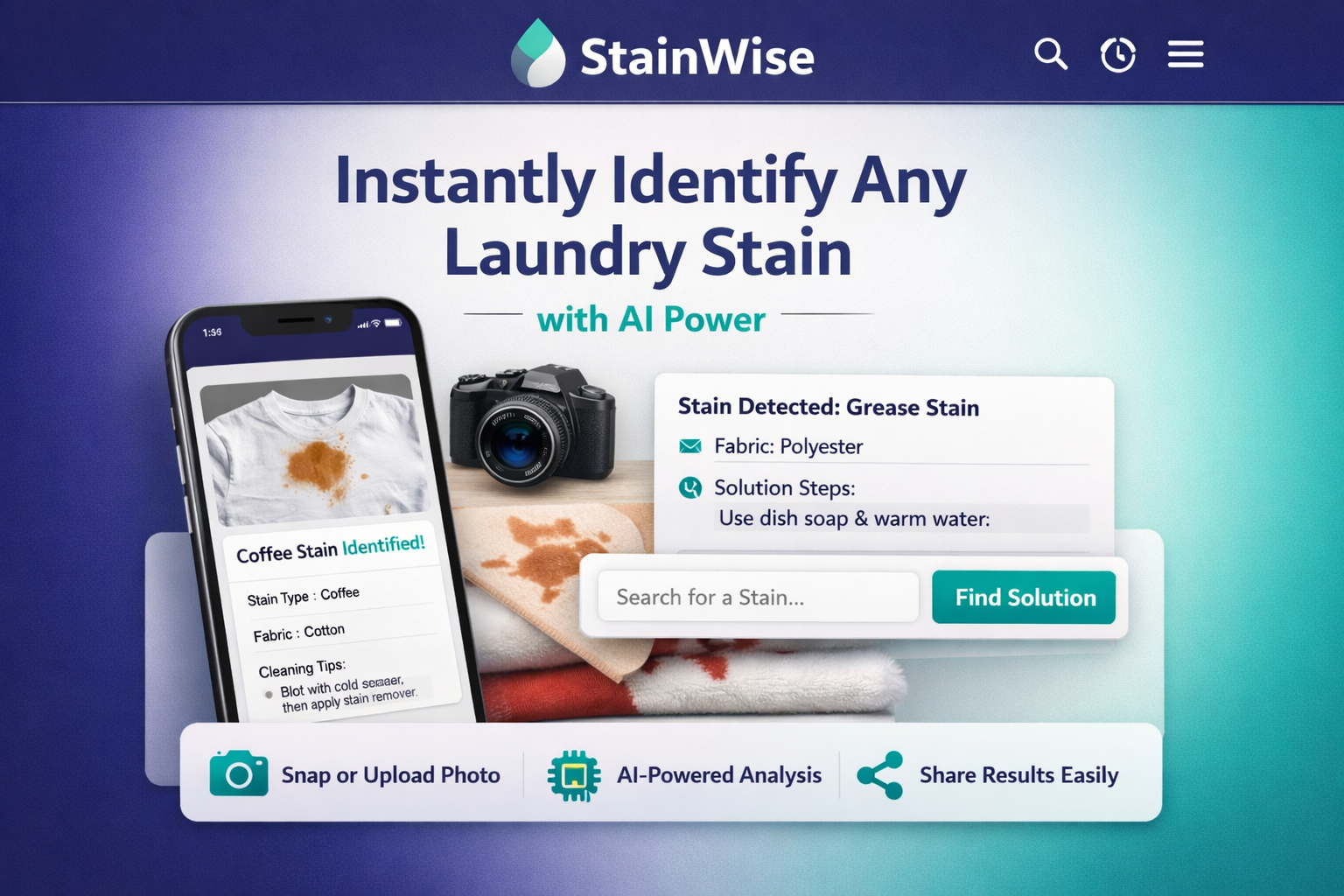
Laundry day often brings with it the dreaded discovery of an unknown stain. Is it coffee, grease, ink, or something even more mysterious? The wrong cleaning method can permanently set a stain, turning a favorite garment into a rag. For years, removing stains has been a game of guesswork, trial and error, or frantically searching online for generic advice that often misses crucial details like fabric type or stain age. This common household dilemma leads to frustration, wasted time, and prematurely ruined clothes.
StainWise is a web-based tool that narrows down the guesswork. Its AI stain diagnosis looks at the photo and any details you provide, then suggests a likely stain type and a method to try. It is worth being clear about what that means: the suggestion is a well-informed starting point, not a verdict. AI identification can be wrong, so check the garment's care label, follow the instructions on any product you use, and test the method on a small, hidden area first.
This guide covers how the photo analysis works, what the underlying model actually does, and where its limits lie — so you can judge for yourself when to follow a suggestion and when to hand the garment to a professional cleaner.
How AI Powers Instant Stain Recognition
StainWise returns an AI stain diagnosis within seconds. It is not a simple image match; the analysis runs on Google's Gemini 2.5 Pro, a multimodal model that reads the image alongside general knowledge of stain chemistry.
The model processes the visual data — patterns, colours, textures, and the way the mark spreads and saturates — and proposes the most likely stain type. Because it reasons from visual similarity, marks that look alike can be confused, and a photograph cannot reveal a previous treatment or a fabric finish. That is where its suggestions are weakest, and why they need your verification. For instance, a dark, oily ring will be differentiated from a vibrant, sugary smudge. This granular understanding is crucial because different stain types require vastly different treatment approaches. Trying to remove a protein-based stain like blood with hot water can set it permanently, while an oil stain might require a solvent. To understand the fundamental principles, you might find our article on The Science of Stains: Protein, Oil and Dye Marks particularly insightful.
The AI also looks at the surrounding fabric — silk, cotton, a synthetic blend, wool — since the same stain calls for different handling on different materials. It infers this from visual cues such as weave and sheen, and from any detail you add yourself. It cannot read a care label or detect a special finish from a photo, so the label remains the final authority on how the garment may be treated.
Photo Upload and What Affects the Result
Getting an AI stain diagnosis is as simple as taking a picture, and there is nothing to install — StainWise runs in your browser on a phone or a desktop. There are two ways to submit a stain:
The usual route is your device's camera: open StainWise, point the camera at the mark, and capture it. The interface is built mobile-first, so this works comfortably at the sink or in the laundry room. If you already have a photo, or prefer working on a desktop, use the file upload option instead.
Photo quality has a direct effect on how useful the suggestion is. A clear, well-lit image gives the model the detail it needs; a blurry or badly lit one makes a mistaken reading considerably more likely.
Tips for Best Photo Capture:
- Good Lighting: Ensure the stain is well-lit, ideally with natural light. Avoid harsh shadows that might obscure details.
- Clear Focus: Make sure the stain is in sharp focus. Blurry images can hinder the AI's ability to identify specific characteristics.
- Neutral Background: If possible, place the stained item on a plain, contrasting background to help the AI isolate the stain from its surroundings.
- Close-Up but Comprehensive: Get close enough to show the stain's details, but also capture enough of the surrounding fabric to give context.
- Multiple Angles (Optional but helpful): For complex stains, capturing a couple of different angles can sometimes provide additional data for the AI.
Following these tips gives the stain type identifier the best material to work with, which makes a sensible suggestion far more likely.
The Technology Behind StainWise
StainWise's analysis runs on Google's Gemini 2.5 Pro. The model does not simply look for colours; it interprets a range of visual cues in the image and reasons about them against general knowledge of stain and fabric behaviour.
The Gemini 2.5 Pro model is a multimodal AI, meaning it can process and understand information from various types of data inputs, including images. When you upload a photo, the AI employs cutting-edge computer vision techniques to:
- Segment the Image: It first identifies the boundaries of the stain, separating it from the clean fabric.
- Feature Extraction: It then extracts an array of features – color profiles, textures, edges, size, shape, and even the way light interacts with the stained area.
- Contextual Analysis: The AI considers the surrounding fabric, deducing its type based on weave, sheen, and other visual characteristics, which is crucial for safety and effectiveness.
From that reading, the model attempts to distinguish between stains that look similar but behave differently — red wine versus berry juice, oil-based versus water-based paint — because each needs a different treatment. It is worth being realistic about the limits: a general-purpose vision model working from one photograph is not equivalent to a dry cleaner inspecting the garment in person, and it cannot test the fibre or smell the residue. Treat the output as a considered opinion to check, not a professional assessment. That is the honest version of what StainWise as an AI laundry assistant offers.
Beyond Identification: Suggested Methods and Other Features
Naming the stain is only half of it — knowing what to do next is the part that matters. So once the AI stain diagnosis is complete, StainWise returns a suggested method rather than just a label.
Based on the stain type and fabric it has inferred, the results page gives you:
- Step-by-Step Cleaning Steps: Clear instructions covering the type of product, the technique, and the order to work in.
- Warnings: Alerts about what not to do — avoiding hot water on certain stains, or particular chemicals on delicate fabrics. This is often the most useful part, since the wrong first move is what makes a stain permanent.
- Practical Tips: Pre-treatment options and alternatives to try on stubborn marks.
Photo analysis is not the only route. If you already know what the stain is, the "Know the Stain, Find a Solution" search tool lets you pick the stain type yourself — type "coffee stain" or "ink on denim" and go straight to a method. Because you supply the identification, this path avoids the main source of error, and it pairs well with our Stain Removal by Fabric: A Step-by-Step Guide.
StainWise also keeps a history of your past analyses so you can revisit what you tried, and lets you share a result with someone else in the household. For a walk through specific everyday marks, see Everyday Stains: Coffee, Wine and Ink Explained.
Why Choose StainWise as Your Laundry Companion
StainWise is a practical tool rather than a miracle cure, and it helps most in three specific ways.
It saves time. Instead of working through conflicting search results, you get one starting point in seconds — and acting quickly matters, because a fresh stain is much easier to treat than a dried one.
It lowers the risk of fabric damage. Generic methods can bleach colours, weaken fibres or set a mark permanently. Because the suggestion takes the fabric into account, you are less likely to reach for something too harsh. The care label still governs what the garment can take, so read it before you start, and test on a hidden area. For broader fabric care, see Laundry Best Practices for Longer-Lasting Clothes.
It gives you a plan and some reasoning. Knowing why a step is recommended — and which moves to avoid — puts you in a better position than guessing, including the ability to decide the suggestion does not fit your garment. Treating a stain successfully also means one less item discarded early, which is a small but real saving of money and resources.
Frequently Asked Questions About AI Stain Diagnosis
Q: How accurate is StainWise's AI stain diagnosis?
A: We do not publish an accuracy figure, because we have not measured one under controlled conditions — so any number here would be invented. What we can say is how it behaves: the analysis runs on Google's Gemini 2.5 Pro and produces a likely stain type from a photograph. Visually similar stains can be confused, and unusual or heavily treated marks are harder to read. A clear, well-lit photo improves the result. Always treat the output as a suggestion to verify.
Q: Can StainWise identify stains on any type of fabric?
A: It handles common fabrics — cotton, synthetics, wool, silk and blends — and adjusts its suggestions to the material it infers. It cannot read a care label, detect a special finish, or reliably judge an unusual textile from an image, so check the label before treating anything, and spot-test first.
Q: What if I don't have a good photo of the stain?
A: Use the "Know the Stain, Find a Solution" search tool instead. If you already know what caused the mark, you can select the stain type yourself and get a cleaning method without uploading an image.
Q: Is StainWise free to use?
A: Current pricing and any account requirements are shown on the StainWise site itself, which is the only reliable source as terms can change. For more on how the tool works, see our StainWise FAQ: How Our AI Stain-Identification Tool Works.
Q: Can StainWise recommend specific cleaning products?
A: StainWise's solutions often refer to categories of cleaning agents (e.g., enzyme-based cleaner, oxygen bleach) rather than specific brand names, to offer flexibility and accommodate what you might already have on hand. It focuses on the chemical principles and techniques required for effective removal.
Conclusion
An unidentified stain is far less daunting when you have somewhere to start. StainWise's AI stain diagnosis gives you that: a likely stain type and a step-by-step method matched to the fabric it appears to be, in seconds, instead of a scroll through conflicting advice.
It is a laundry stain identifier, not a guarantee. The AI can misread a mark, and some stains — particularly old ones, or any that have already been through a hot dryer — will not come out completely no matter what method you use. Used alongside the care label, the product's own instructions and a spot-test on a hidden area, it takes most of the risk out of that first attempt, and it will tell you when a professional cleaner is the better call.
Got a stain to deal with? Try StainWise on your next spill.