StainWise Blog
Everyday Stains: Coffee, Wine and Ink Explained
How StainWise analyses common stains such as coffee, wine and ink, and suggests a method to try. AI identification is a suggestion, not a guarantee.
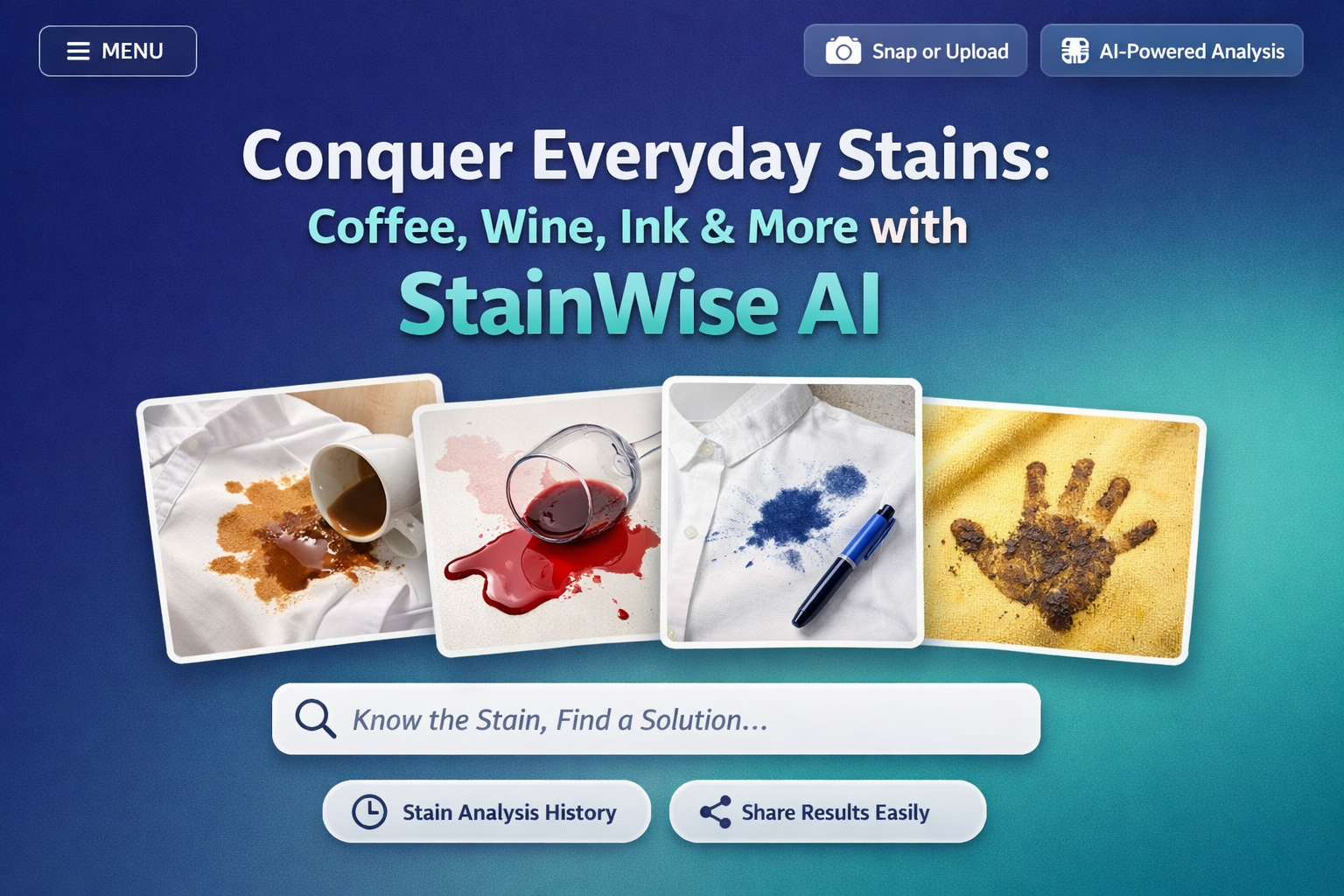
Life is full of unexpected moments, and often, those moments leave their mark – literally. A morning coffee spill, a celebratory splash of red wine, or an accidental ink mark can quickly turn a good day into a laundry nightmare. Dealing with these common, everyday stains often feels like a guessing game, leading to frustration, ruined garments, or even setting the stain deeper. But what if you could start from a structured, informed method instead of guessing?
StainWise is a web-based stain-identification tool. It uses AI to analyse the photo and details you provide, then suggests a possible stain type, a likely fabric, and a step-by-step cleaning method to try. AI identification can be wrong, so treat the result as an informed starting point rather than a verdict: check the garment care label, follow the product's instructions, and test any solution on a small, inconspicuous area first.
In this article we look at how StainWise approaches the most frequent culprits — coffee, wine, ink and more — what its analysis actually does, and where the realistic limits lie. The aim is to replace guesswork with a considered first move, not to promise that every stain will lift.
Your Go-To for Life's Little Accidents
Everyday life is a beautiful mess. From breakfast to bedtime, spills and splatters are simply inevitable. Whether you're a parent battling juice stains, a student accidentally dribbling coffee on your notes, or a professional facing a sudden ink blot, these common incidents can cause immediate panic. The traditional approach often involves a desperate dash to the laundry room, a quick Google search that yields conflicting advice, or worse, an attempt to scrub it out, only to find the stain has spread or permanently set.
StainWise AI transforms this chaotic process into a calm, controlled one. Imagine simply taking a photo of the offending mark with your phone, and within seconds, receiving a detailed diagnosis and a tailored cleaning plan. Rather than a single generic tip, the analysis takes account of what the stain looks like and what the fabric appears to be, then suggests a method matched to that combination. It is a well-informed suggestion available whenever you need it — not a substitute for a professional cleaner when an item is valuable or delicate.
Beyond image analysis, StainWise includes a "Know the Stain, Find a Solution" search tool, so if you already know what the mark is you can select the stain type yourself and go straight to a method — which also avoids the main source of error. For more on how the tool works and where its limits lie, see StainWise: An AI Laundry Assistant for Stain Removal.
How StainWise Handles the Most Frequent Stains
When it comes to everyday stains, a one-size-fits-all approach simply doesn't cut it. The chemistry of a coffee stain differs significantly from that of a wine stain, and both require different treatments depending on the fabric they've landed on. That is the gap StainWise tries to close, suggesting a method matched to the specific combination rather than one generic tip.
Coffee Stains: A Morning Mishap Solved
Coffee is the lifeblood for many, but a spilled cup can be a morning nightmare. The tannins in coffee can quickly bond with fabric fibers, making dried coffee stains particularly challenging. Generic advice often suggests cold water, but is that always best? StainWise's AI analyzes your photo to determine if the stain is fresh or dried, its concentration, and the fabric type (e.g., cotton, silk, synthetic). For a fresh coffee stain on cotton, it might recommend a cold water rinse followed by a specific enzymatic pre-treatment. For a dried stain on a delicate silk blouse, it would suggest a gentler approach, perhaps involving a diluted white vinegar solution and careful blotting, providing clear warnings about potential color changes.
Wine Stains: From Cheers to Clean
Red wine stains are infamous for their vivid color and perceived permanence. The panic often leads to desperate scrubbing or applying salt, sometimes making the situation worse. StainWise AI takes the guesswork out of wine stain removal. By analyzing the color saturation, spread, and the underlying fabric, it distinguishes between a deep red Cabernet on denim and a light rosé on linen. The app might recommend applying a specific absorbent (like baking soda) immediately for red wine on cotton, followed by a hydrogen peroxide mixture if the fabric is colorfast. For lighter colored wine or delicate fabrics, a different, less aggressive method focused on gentle flushing and enzymatic cleaners would be advised.
Ink Stains: Matching the Solvent to the Ink
Few things are as frustrating as a rogue pen mark or a leaky ink cartridge. Ink stains are notoriously difficult because their composition varies greatly – from water-based ballpoint ink to oil-based permanent markers. Without knowing the ink type, you risk smudging it further or using an ineffective solvent. This is where the image analysis behind StainWise: AI-Assisted Laundry Stain Identification can help narrow things down. By examining the mark's appearance, consistency and how it sits in the fabric, StainWise can often suggest a likely ink type — though it may be wrong. It will then point you towards isopropyl alcohol, hairspray or a dedicated ink remover, with blotting and rinsing steps that reduce the chance of spreading. Spot-test any solvent on a hidden area first.
Beyond the Big Three: Other Common Culprits
While coffee, wine, and ink are frequent offenders, laundry is full of other everyday challenges like grease, chocolate, grass, or mud. StainWise is not limited to a handful of types — it covers a wide range of common household stains, and its suggestions distinguish between, say, grease on a polyester blend and chocolate on wool. Unusual, industrial or unidentifiable marks are where AI suggestions are least reliable, and those are the cases to take to a professional cleaner. For a broader understanding of how it delivers customized advice for all types of messes, check out Stain Removal by Fabric: A Step-by-Step Guide.
Two Worked Examples: Marker on Linen and Set-In Coffee
Rather than customer anecdotes, here are two illustrative walkthroughs of how a structured approach differs from guesswork. Outcomes vary with the stain, the fabric, the age of the mark and any previous treatment, so treat these as method examples rather than expected results.
Permanent marker on white linen. The instinctive response — scrubbing with water — tends to spread marker dye, because the pigment is carried in a solvent that water does not dissolve. A structured approach instead places an absorbent cloth underneath, applies a small amount of isopropyl alcohol to the back of the mark and blots repeatedly, replacing the cloth as it picks up colour, before rinsing and washing. On white cotton and linen this often lightens marker substantially. On synthetics, wool and silk, expect partial improvement rather than complete removal, and spot-test the alcohol on a hidden seam first because it can affect some dyes.
Dried coffee on a cotton-blend sweatshirt. Coffee combines tannin with a little oil and sugar, which is why a plain cold rinse often leaves a faint brown ring. A better sequence is a cold-water flush from the reverse side, then an enzyme-containing pre-treatment left to dwell for the time stated on the product label, then a normal wash. Heat before the stain has gone can set the tannin, so avoid the dryer until the mark has cleared. A stain that has already been through a hot dryer may not come out completely.
What both examples share is sequence and restraint: identify the likely stain chemistry, work from the back of the fabric, avoid heat until the mark has gone, and stop before damaging the fibre. That is the reasoning StainWise tries to make available, and following the care label remains essential.
The Science Behind Spotless: Why StainWise Works
StainWise is built on a multimodal AI model that reads the image alongside established stain chemistry. It is not a laundry professional and does not replace one, but it can apply the same reasoning a careful person would use — matching probable stain chemistry to fabric type — more quickly than searching for conflicting advice. Understanding that reasoning is what makes the suggestions useful, and also what makes their limits clear.
When you upload a photo of your stained garment, the AI initiates a complex diagnostic process. First, it employs advanced image analysis to identify the unique characteristics of the stain itself. This includes its color, texture, saturation, and how it interacts with the fabric fibers. Is it an oily residue, a pigmented liquid, or a solid particulate? This initial identification is crucial because different stain types require different chemical approaches – some respond to enzymes, others to solvents, acids, or alkalis.
Simultaneously, StainWise analyzes the fabric type from the image. This is a critical step, as a cleaning solution safe for sturdy cotton might be disastrous for delicate silk or wool. The AI identifies textile patterns, weaves, and material characteristics to ascertain whether it's a natural fiber, a synthetic blend, or a delicate material. This combined understanding of "what kind of stain" and "what kind of fabric" allows StainWise to precisely tailor a cleaning regimen. For instance, hydrogen peroxide might be effective for a wine stain, but StainWise would warn against its use on darker, non-colorfast fabrics, suggesting an alternative.
The model draws on established knowledge of how common stain types interact with cleaning agents and fabrics, and uses it to propose a step-by-step method that aims to lift the mark while limiting the risk of damage. Because both the stain reading and the fabric reading are inferences from a photograph, either can be mistaken — which is why the care label, the product's own instructions and a spot-test on a hidden area remain the real safeguards. Delve deeper into the fundamental concepts of how these interactions work by reading The Science of Stains: Protein, Oil and Dye Marks.
Frequently Asked Questions About Everyday Stain Removal with StainWise
Q: How quickly does StainWise provide a solution for everyday stains?
A: StainWise AI is designed for speed. Once you capture or upload a photo of your stain, the AI analysis typically takes just a few seconds to process and generate a detailed, step-by-step cleaning solution. You get immediate, actionable advice when you need it most.
Q: Can StainWise help with old or set-in coffee, wine, or ink stains?
A: Yes, StainWise can assist with set-in stains. While fresh stains are always easier to remove, the AI considers the age of the stain (if you can provide that context) and its appearance to recommend specific, more intensive treatments for older, dried-on stains, such as longer soaking times or stronger pre-treatment options appropriate for the fabric.
Q: Is StainWise safe to use on delicate fabrics?
A: StainWise tries to infer the fabric from your image and adjusts its suggestions accordingly, flagging treatments that are risky on silk, wool and other delicates. Because that inference can be wrong, the care label is the authority, not the app. Always spot-test on a hidden area first, and for valuable, antique or dry-clean-only items consult a professional cleaner instead of treating the stain yourself.
Q: What if I don't know what caused the stain?
A: No problem! StainWise AI is specifically designed for situations where you're unsure of the stain's origin. By analyzing the visual characteristics of the stain itself—its color, texture, shape, and how it's absorbed into the fabric—the AI can often infer the likely stain type and provide appropriate guidance.
Q: Does StainWise recommend specific products for common stains?
A: StainWise's solutions focus on common household items and widely available laundry products (e.g., dish soap, hydrogen peroxide, enzymatic cleaners). While it doesn't endorse specific brands, it will suggest the type of product needed (e.g., "oxygen-based bleach safe for colors" or "enzyme-based stain remover") so you can choose what works best for you. For more answers to common questions, visit our StainWise FAQ: How Our AI Stain-Identification Tool Works.
Conclusion
Everyday stains need not mean prematurely discarded clothing. StainWise gives you a structured starting point instead of a guess — from dried coffee to spreading red wine to a delicate ink mark, it suggests a sequence of steps matched to what it believes the stain and fabric to be.
Instead of generic advice, you get a suggestion that takes both the likely stain type and the probable fabric into account. It will not be right every time — AI identification can be incorrect, and some stains are genuinely permanent — but it gives you a considered first move, a note of what to avoid, and a clear point at which to stop and consult a professional cleaner.
Want a considered first move next time something spills? Head to our home page to upload a stain photo and see what StainWise suggests — then check the care label and spot-test before you treat the garment.