StainWise Blog
Stain Removal by Fabric: A Step-by-Step Guide
How to match a cleaning method to both the stain and the fabric, with step-by-step AI guidance. AI identification is a suggestion, not a guarantee.
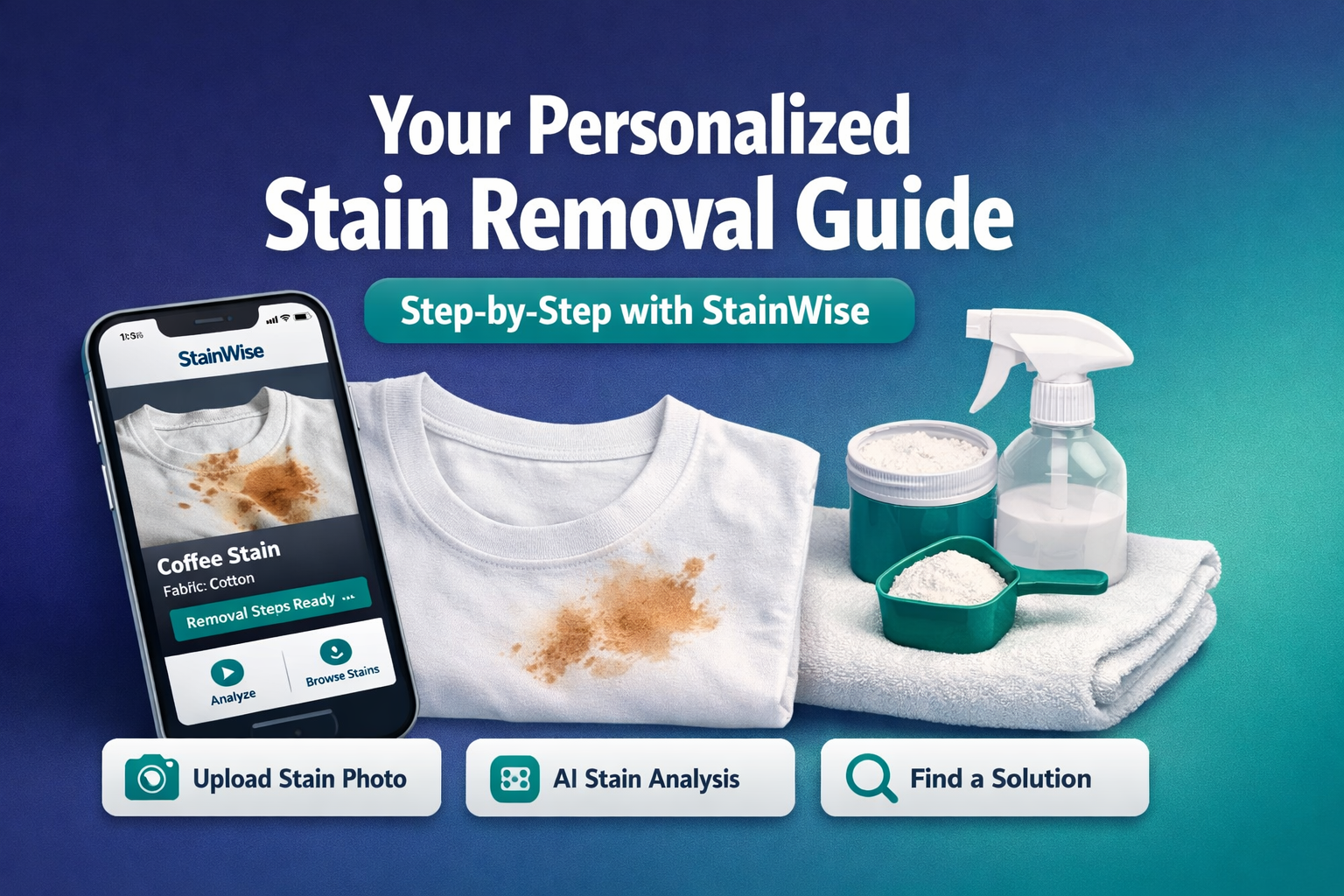
Laundry stains are the bane of every household. That accidental coffee spill, the mysterious mark on your favorite shirt, or the grass stains after a weekend adventure can all feel like tiny catastrophes. The frustration of trying to figure out how to remove stains, often resorting to guesswork and outdated advice, is a common experience. You scour the internet, try home remedies, and sometimes, tragically, end up making the stain worse or even damaging your beloved garments.
But what if you didn't have to guess? A suggestion matched to both the type of mark and the fabric it landed on is a far better starting point than a generic tip. This article looks at why stain-specific, fabric-specific advice matters, and how StainWise — a web-based stain-identification tool — tries to provide it. Its AI suggestions can be wrong, so treat them as an informed first move to verify rather than a guarantee.
Getting Custom Solutions for Every Stain & Fabric
The world of stains is vast and varied. A grease stain requires a completely different approach than a berry stain, and what works on sturdy cotton might ruin delicate silk. This complexity is why generic "stain removal tips" often fall short. They can't account for the unique chemistry of each stain, nor the specific properties of every fabric.
The Problem with Generic Stain Advice
Many traditional stain removal charts offer broad recommendations that can be ineffective or even damaging. For instance, applying heat to a protein-based stain (like blood) can permanently set it, while rubbing an ink stain can spread it further. Without knowing the exact nature of the stain and the material, you're essentially experimenting on your clothes, hoping for the best. This hit-or-miss approach leads to wasted time, wasted cleaning products, and often, ruined garments.
Why Specifics Matter: Stain Type and Fabric Composition
Effective stain removal is a science. It hinges on understanding two critical factors: the stain's composition and the fabric's reaction. Is it oil-based, water-based, protein, tannin, or pigment? Each requires a specific solvent or chemical reaction. Similarly, fabric type dictates the cleaning method. Wool and silk demand gentle, enzyme-free cleaners, while synthetics might tolerate stronger treatments. StainWise uses AI to suggest cleaning solutions for stains that account for both the stain and the fabric. Because both are inferred from a photograph, the suggestion can be wrong — check the care label and spot-test before treating the whole mark.
Why Tailored Advice Prevents Laundry Disasters
Ever ruined a favorite shirt by attempting to clean a stain with the wrong method? It’s a common laundry disaster that tailored advice is specifically designed to prevent. The difference between success and a permanent mark often comes down to precise, informed action.
Protecting Delicates and Valuables
Delicate fabrics like silk, cashmere, and lace are especially vulnerable to harsh chemicals, aggressive scrubbing, or incorrect water temperatures. A generic stain remover might be fine for sturdy denim but damaging to a delicate blouse. StainWise takes those differences into account, suggesting gentler fabric stain remover techniques where the fabric calls for it. For genuinely valuable or antique items, though, a professional cleaner is the safer choice than any home treatment.
Avoiding Common Stain Removal Mistakes
Many common stain removal myths persist, leading people down paths of destruction rather than cleanliness. For example, rubbing a stain vigorously can spread it and embed it deeper into the fibers. Using hot water on certain stains can set them, making them nearly impossible to remove. Without a clear, step-by-step stain removal guide, it's easy to fall prey to these pitfalls. StainWise flags what not to do alongside the steps to follow, which is often the more valuable half — avoiding the moves that set a stain permanently. Understanding the science of stains behind these recommendations is key to successful removal.
From Diagnosis to Spotless: The StainWise Process
A laundry stain is less alarming when you have a plan. StainWise moves you from "what is this mark?" to a clear sequence of actions, which is a better position than trying remedies at random. What it offers is a considered step-by-step stain removal starting point, not certainty about the outcome.
Snap, Upload, or Search: Your Stain's First Step
Getting started is simple, and there is nothing to install — StainWise runs in your browser. With a fresh stain in front of you, open the site, photograph the mark with your camera or upload an existing image, and the analysis begins. If you already know what caused it, the "Know the Stain, Find a Solution" tool lets you select the stain type yourself and skip the photo entirely; since you supply the identification, that route avoids the main source of error.
AI-Powered Analysis: Beyond the Naked Eye
Once your image is submitted, StainWise's AI (Gemini 2.5 Pro) examines the visual cues — colour, edge, sheen, how the mark sits in the weave — and weighs them against established knowledge of stain types, fabrics and cleaning agents. It also infers a probable fabric so the suggested method suits the material. Both of those are inferences from a single photograph, which is exactly why the result is framed as a likely stain type rather than a definite one, and why the cleaning solutions for stains it offers should be spot-tested first.
What the Suggested Cleaning Plan Contains
Once the analysis is finished, StainWise presents a suggested cleaning plan. Rather than one generic tip, it is a step-by-step stain removal method chosen for the stain type and fabric the AI believes it is looking at — which is why it is worth checking that both look right before you start. The results page displays:
- Identified Stain Type: Knowing what you're up against is half the battle.
- Cleaning Steps: A numbered list of actions, from pre-treatment to washing, designed for maximum effectiveness.
- Warnings: Alerts about what to avoid (e.g., "Do not use hot water," "Avoid scrubbing").
- Practical Tips: Small adjustments that improve your chances and reduce the risk to the fabric.
Taken together, that is what StainWise as an AI laundry assistant is for: a structured first attempt, with the reasoning visible so you can judge whether it fits your garment.
Mastering Common and Stubborn Stains with Confidence
From daily mishaps to marks that look hopeless, stains are part of life. StainWise aims to give you a strategy rather than a scrub — the specific cleaning solutions for stains worth trying first, and an honest indication of when a mark may not come out.
The Right Approach for Everyday Messes
Coffee drips, food spills, makeup smudges – these are the everyday adversaries of clean clothes. While they might seem minor, approaching them incorrectly can lead to permanent damage. For instance, a fresh coffee stain on a white cotton shirt requires a different initial response than a greasy food stain on a synthetic blend. StainWise suggests a targeted method for these common cases, which usually means less scrubbing and less wasted detergent than working through remedies at random. You can also browse our stain removal guides by stain type to find a recommended cleaning method in seconds, making laundry less of a chore and more of a science.
Tackling Tough Stains
Then there are the formidable stains: red wine, ink, blood, or set-in mud. With the right fabric stain remover and a careful method, many of these improve substantially — though set-in and heat-set marks may only lighten rather than disappear. StainWise tries to distinguish between similar-looking stains, such as the various red ones, and suggests a method suited to each, specifying the type of cleaning agent, the water temperature and the technique. On the hardest cases, expect improvement rather than a guarantee. For a deeper dive into specific challenging stains, check out our guide on everyday stains: coffee, wine and ink explained.
Beyond Stain Removal: Pro Tips for Laundry Longevity
While stain removal is often an urgent task, a truly comprehensive approach to laundry care extends beyond immediate fixes. Integrating smart practices into your routine can significantly enhance the longevity and appearance of your garments, preventing future stains and maintaining their quality.
Pre-Treatment Prowess
Effective stain removal often begins before the wash cycle. Pre-treating is a crucial step-by-step stain removal component that prepares the stain for washing, allowing detergents to work more effectively. StainWise's advice often includes specific pre-treatment steps, such as blotting, rinsing, or applying a particular solution, to loosen and break down the stain's components. Understanding the right pre-treatment for each stain type is a game-changer for overall success.
Fabric Care Best Practices
The fabric itself dictates so much about its care. Ignoring care labels or using universal cleaning methods can lead to shrinkage, fading, stretching, or damage. StainWise not only guides you on stain removal but also implicitly reinforces good fabric care by recommending methods safe for your garment. Embracing habits like sorting clothes correctly by color and fabric type, choosing the right wash cycle, and understanding drying instructions are all integral to maintaining your wardrobe. For more comprehensive guidance, explore our article on beyond stains: essential laundry best practices for longevity.
When to Seek Professional Help
Despite all the advancements in AI and home remedies, some stains or delicate items simply require professional expertise. Certain antique fabrics, heavily soiled items with unknown stains, or garments made from complex blends are often best left to a professional dry cleaner. StainWise will often provide warnings if a stain or fabric is particularly challenging, advising you when professional intervention might be the safest and most effective option to prevent irreparable damage. This honest assessment is part of our commitment to responsible garment care.
Frequently Asked Questions
How does StainWise decide which cleaning method to suggest?
StainWise uses AI (Gemini 2.5 Pro) to analyse your stain image, proposing a likely stain type and fabric. It then matches that reading to established cleaning agents and techniques to build a step-by-step method. Both readings are inferences from a photograph, so either can be mistaken.
Can StainWise remove any stain?
No. Some stains — particularly old, set-in or heat-set marks, and chemically complex ones — will not come out completely, and no method or tool can change that. StainWise aims to give you a sensible first attempt and will tell you when a professional cleaner is the better option.
Is StainWise safe for all fabrics?
It takes fabric into account, adjusting suggestions so delicates like silk and wool get gentler treatment than cotton or synthetics. But it cannot read a care label or detect a special finish from an image, so the label remains the authority. Always spot-test on a hidden area before treating the whole stain.
What if I don't have the recommended cleaning product?
StainWise often provides common household alternatives or general types of cleaners. If a specific product is recommended and you don't have it, you can usually find equivalent products at your local grocery or hardware store. The core principles of the step-by-step stain removal remain the same, even if the exact brand differs.
How can I learn more about using StainWise?
For more detail, see our StainWise FAQ: How Our AI Stain-Identification Tool Works page, which covers how the analysis works, its limits, and troubleshooting.
Conclusion
Laundry stains are less daunting when you have a method rather than a guess. StainWise suggests cleaning solutions for stains matched to what it believes the stain and fabric to be, so you can start with a sensible first move instead of trying whatever is under the sink.
It will not be right every time — AI identification can be incorrect, and stains that have already been through a hot dryer may never come out completely. Used with the care label, the product's instructions and a spot-test on a hidden area, though, it takes most of the risk out of that first attempt, and it tells you when a professional cleaner is the better option.
Got a stain to deal with? Try StainWise on your next spill.